5 min read
The 1970s and 1980s revival of Art Deco
Inspiring fashion, illustration and design, a look at the 1970s and 1980s Art Deco revivals that are most fun, interesting and collectable.
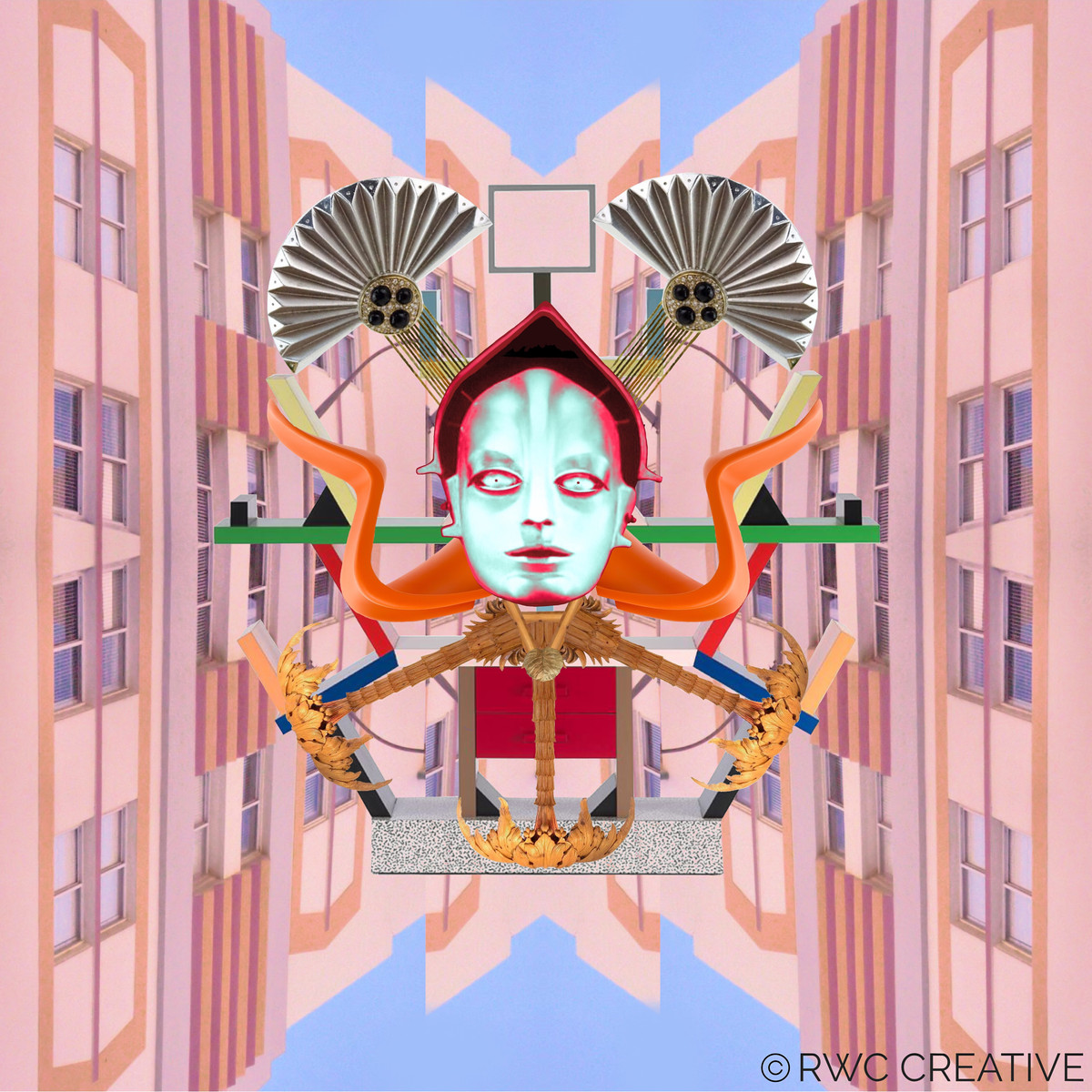
Inspiring fashion, illustration and design, I will be looking at some of the 1970s and 1980s Art Deco revivals that I find the most fun, interesting and collectable.
The 1920s and 1930s Art Deco period oozed sophistication, glamour and style. A blinding moment in time that exploded with bursts of sun rays and star motifs. A flapper doing the Jitterbug on a table top, champagne overflowing from a shallow coupe. This heady movement galloped past the old and embraced the new and all that was Art Moderne. Epitomising optimism and celebration, it is no surprise this joyous movement continues to be reinvented and interpreted today.
Today, original 1920s Art Deco pieces fetch a premium, however the later revivals can still provide good value for the discerning collector. The 1960s saw a post war renewed interest in Art Deco. Preservation initiatives such as those at Miami Beach helped to ignite tourism across Art Deco mecca cities such as Singapore, Havana and Paris. The counterculture movement of the 1960s rebelled against the capitalist and modernist sentiments of the 1950s, leading to a new wave of nostalgia and appreciation of the decorative past. Period films such as Bonnie and Clyde, The Great Gatsby and Bugsy Malone were box office hits. Style influencers Yves Saint Laurent and Biba's Barbara Hulanicki championed this revival in the 1970s; collectors and tastemakers including Karl Lagerfeld, Barbra Streisand, Elton John, David Bowie and Robert A. M. Stern all played a part.
The 1970s, French Art Deco revival
Maison Jansen and Maison Charles were two French design houses that shared an intrinsic interest in historically referenced design. They successfully exploited their back catalogues of designs to great effect. Maison Jansen skilfully blended classical motifs, inspired by its many noble and royal commissions, while Chistyane Charles created a famed collection of nature inspired sculptural lamps at Maison Charles. In both 1978 and 1981, Maison Charles was awarded the Lampe d'Or design award for the Feuille d'Eau lamp and the Orchidée lamp.
In the 1970s Pierre Paulin pushed the Art Deco revival toward a futuristic aesthetic, pioneering the use of new materials available at the time. Paulin executed his streamlined designs with an Arte Moderne vibe, each piece reflecting a sculptural quality that is other worldly.
Italian architect designers Afra and Tobia Scarpa, who in 1970 received the Compasso d'Oro award, abandoned the function over decoration ideals of post war modernism, working sumptuous materials into sophisticated geometric forms. Less restrained and more futuristic Italian designers Willy Rizzo and Gabriella Crespi regularly imbued glamour and opulence in their designs which often directly referenced Art Deco.
The 1980s, Italian Art Deco revival
The 1980s ushered in some of the most distinctive and radical examples of this revival. The Italian avant garde Memphis Group, Studio Alchimia and Archizoom Associati emerged from the postmodern reinvigoration of the anti rational Radical Design movement. Each added an indicative blend of intellect and wit, this was anti design at its best. Art Deco architectural forms were often reinterpreted using a mix of natural and experimental materials, blended with a contrasting palette of colour and pattern. The Italian set influenced an entire generation of artists, designers and influencers.
I advise interested clients to consider illustrative art and graphic design to enhance their collections. Previous projects included acquiring original illustrations by Antonio Lopez for a client which proved to be a fruitful investment as this was prior to the documentary on his life, Sex, Fashion and Disco. Born in Puerto Rico, Lopez first came to the attention of the fashion world in the 1960s when he created illustrations with art director Juan Ramos.
Another illustrator and designer of note is Barbara Hulanicki. Born in Poland and raised in the UK, Barbara has been an icon of British fashion since the conception of Biba in the 1960s. Founded with her husband Stephen Fitz-Simon, Biba became a global phenomenon. The Big Biba store which opened in London in 1973 had a sumptuous Art Deco interior reminiscent of the golden age of Hollywood. Pieces from this store have been gaining cult status amongst collectors today. Other Biba illustrators worth mentioning are Malcolm Bird, Chris Price and Kasia Charko.
The 1980s also had its share of artists and illustrators inspired by Art Deco. Patrick Nagel was best known for his illustrations for Playboy magazine and the pop group Duran Duran. His prints were prolific and graced many walls in the 1980s. His original oil paintings are now being sold for $10,000 to $20,000.
The appetite for Art Deco jewellery in the 1980s spawned a collaboration that produced a comprehensive collection of revival jewellery. Roman Petrovich Tyrtov, who called himself Erté after the French pronunciation of his initials, was one of the most prolific exponents of Art Deco throughout the twentieth century. Jack Solomon, founder of the Circle of Fine Arts, was inspired after visiting an Erté retrospective with his wife in 1974. After initiating a partnership Solomon had a large portion of the artist's works published in limited editions. He noted the artist had expressed a strong desire to create jewellery. Solomon helped the artist realise this dream after an introduction to jewellery designer Natalie Kane O'Keiff. Their collaboration lasted 10 years and in total 328 designs, in different versions, were produced.
Begin a conversation
InValued provides expert art, antique and jewellery valuations in Sydney and across Australia and New Zealand. If you would like to discuss a valuation, inventory or sale, please get in touch.